
FR
live
section

Linux

Toolpak wants to do for developer tools what Flatpak did for apps

On 26 September 2026, GNOME developer Jordan Petridis introduced Toolpak, a Flatpak-inspired format for shipping strace, ripgrep, and qemu on image-based systems without breaking them. For anyone working on Silverblue or GNOME OS, it fills the gap immutable distributions never closed.

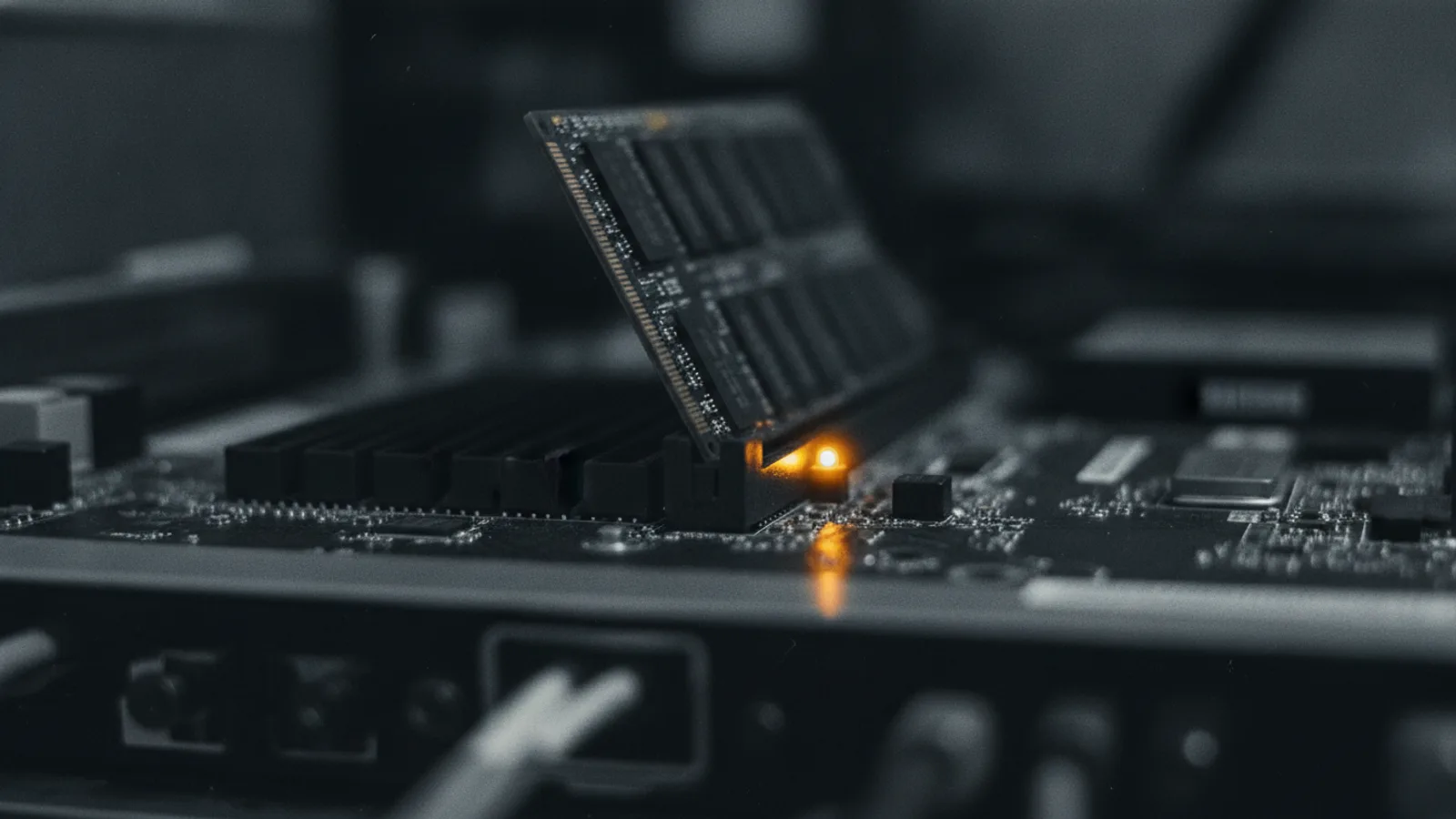
Linux 7.4 makes hot-adding memory to VMs and CXL up to 81% faster

A patch series by Yuan Liu (Intel), queued in mm/core.git ahead of the Linux 7.4 merge window, replaces page-by-page zone scans with an optimized contiguity check. Measured: up to 81% less time to hot-add memory to a VM and 75% to hot-remove it, with Samsung also reporting CXL gains.

The Linux kernel considers an AGENTS.md to rein in patches generated by AI agents

On September 24, 2026, maintainer Sasha Levin proposed adding an AGENTS.md file to the Linux kernel repository to fix attribution mistakes made by AI agents that generate patches. The proposal, debated on LKML, raises a real question: steer agents with a single file or with purpose-built documentation.

The Linux kernel adds a taint flag to filter out fuzzing-bot bug reports

On September 24, 2026, Greg Kroah-Hartman merged into driver-core-next a new taint flag, TAINT_FORCED_BIND, that marks kernels whose sysfs bind/unbind files have been written. It targets fuzzing bots like syzbot that arbitrarily bind drivers to devices and drown maintainers in pointless bug reports.

A Fedora discussion proposes swapping LibreOffice for Collabora Office by default

A Fedora Discourse thread, relayed by Phoronix on September 24, 2026, proposes replacing LibreOffice with the downstream Collabora Office on Fedora Workstation, citing an ageing interface. The still-informal debate exposes the real tension in the Linux desktop: governance and funding, more than features.

Linux 7.3-rc3 exposes maintainer overload from AI-generated patches

On September 13, 2026 Linus Torvalds released Linux 7.3-rc3, another fairly large rc driven by XFS and the SMB client, against the backdrop of Greg Kroah-Hartman’s warning that AI-generated patches are overwhelming maintainers. Follow the Assisted-by policy and take stock of what the AI wave changes for kernel contributors.

Google retires the C Binder driver in favor of its Rust rewrite

On September 18, 2026, Google submitted the patch that removes 11,000 lines of the C Binder driver, replaced by the Rust version upstreamed in Linux 6.18 and slated for Linux 7.4. It is the first time a major kernel driver moves entirely to Rust.

Linux 7.2.5 catches the Blackwell driver up and hardens ksmbd

Stable kernels 7.2.5 and 6.18.51, released September 11, 2026, fix video output for Blackwell GPUs in nouveau and close a memory leak and a use-after-free in ksmbd. Update first if you expose SMB shares or run a Blackwell card.
GNU Coreutils 9.12 speeds up cut and uniq and fixes a recursive traversal race

GNU Coreutils 9.12, released on September 14, 2026, delivers measurable wins — cut up to 4× faster, uniq up to 2.5× — and fixes a race that made -R commands fail against files deleted in parallel. A maintenance release that reminds us the GNU toolkit remains, against its Rust rewrite, the default foundation of every distribution.

GhostLock turns a fifteen-year-old rtmutex use-after-free into root in five seconds

CVE-2026-43499, dubbed GhostLock, is a use-after-free in rtmutex priority-inheritance code that has shipped since kernel 2.6.39 and is reachable by any unprivileged local process. The fix landed in 7.1, but two months after the public PoC, blind spots like RHEL 9 kernel-rt remain: check your version and block PI futexes in the meantime.

A Void Linux maintainer orphans 113 packages after an AI-policy dispute

On September 12, 2026, contributor Andrea Brancaleoni orphaned 113 Void Linux packages — including Kubernetes, Docker, Terraform, and Thermald — after being called out for using an LLM in an undisclosed update comment. AI policies are becoming a maintenance-continuity problem as much as a contribution-ethics one.

Debian 13.7 bundles 107 security fixes and an installer on kernel 6.12.107

On September 12, 2026, Debian shipped 13.7, the seventh trixie point release, bundling 107 security updates and fixes across 106 packages. If you follow security.debian.org you already have most of it — the real value sits in the fresh install images and QEMU’s Secure Boot bypass fix.

Mold rewrites its linker in Rust and aims to become Linux's default linker

Mold 2.42.1, published on September 11, 2026, is the last C++ release: version 3.0 will be rewritten in Rust with the stated goal of becoming /usr/bin/ld on most distributions. For heavy builders, that means links in a few hundred milliseconds instead of seconds or minutes.

Linux 7.3 slashes memory-management lock contention by up to 500×

Two optimizations merged into the Linux 7.3 merge window cut memory-management lock contention: the worst-case anon_vma lock hold time drops from 705 ms to 1.67 ms, and the zsmalloc path speeds up by as much as 1.83× on modest hardware. Teams running JVMs, databases or KSM under memory pressure get a direct latency win just from upgrading.

systemd 262-rc2 adds an AI canary to catch unreviewed LLM code

On September 8, 2026, systemd 262-rc2 shipped an AI canary in its AGENTS.md file: a trap instruction that forces AI coding agents to mark the patches they produce, and whose manual removal proves a human actually reviewed the code. A simple, copyable mechanism for any project receiving AI-generated contributions.

Asahi Linux officially supports M3 Macs, minus GPU, sleep, and HDMI

Asahi Linux merged Apple M3 support into its installer on September 6, 2026: the webcam, microphones, USB 3, hardware video decoding with AV1, Wi-Fi, and Bluetooth work, but the GPU, sleep, and HDMI remain missing. Install in expert mode and wait for the GPU before making it a daily driver.

The first Linux patches boot the MacBook Neo on a single core of its A18 Pro

In early September 2026, developer Yureka Lilian posted the first Device Tree patches for the Apple A18 Pro SoC in the MacBook Neo, with support still limited to a single CPU core. It is the first concrete step toward Linux support on Apple’s entry-level laptop, but daily use is months away.

Greg Kroah-Hartman sees a rough Linux 7.3 cycle under an AI patch flood

On September 2, 2026, Greg Kroah-Hartman warned that the Linux 7.3 cycle is shaping up to be ’rough’: his USB subsystem queue is overflowing with AI-generated patches, while the kernel approaches 2,000 CVEs per release. For distros and infrastructure teams, that means prioritizing real security fixes and bracing for a stable release around October 18.

CERN leaves RHEL and moves its 2,200 control computers to Debian 13

A RHEL and CentOS institution for two decades, CERN announced in late August 2026 that it is moving its 2,200 industrial accelerator-control computers to Debian 13 by the end of the year, with the -march=x86-64-v2 flag as the trigger. For any long-lived industrial or embedded fleet, the lesson fits in one line: watch your distribution’s CPU baseline.

Linux 7.3-rc1 spends a third of its diff on AMD GPU register headers

On August 30, 2026, Linus Torvalds released the first 7.3 candidate, with roughly a third of the diff coming from AMD GPU register definitions alone. Linux gamers and AMD users can test Zen 6 enablement early; Nvidia owners on the open-source driver should sit the release candidates out.

AI crawlers burn 20% of git.kernel.org CPU scraping commits one by one

On August 29, 2026, Konstantin Ryabitsev published hard numbers on AI crawler traffic to the Linux kernel repositories: six million requests a day, a fifth of CPU capacity, and barely 2% legitimate traffic. For any public self-hosted service, it is proof that a proof-of-work challenge only moves the problem.

DHH’s Omacom Foundation raises $10 million and sponsors Hyprland exclusively

On August 21, 2026, David Heinemeier Hansson announced the Omacom Foundation, backed by $10 million from ten patrons, and its first move: an exclusive three-year sponsorship of the Hyprland compositor. For the Linux desktop, it is an unusual funding model that sends money upstream instead of locking it inside a distribution.

mklinux runs multiple Linux kernels on one machine without a hypervisor

On August 25, 2026, Cong Wang released mklinux v7.0-mk2, the first ready-to-run build of the multi-kernel concept: several independent Linux kernels on one physical machine, with no hypervisor and no emulation. A promising path to hard isolation — but not yet a production artifact.

Linux 7.3 opens its merge window as an LTS candidate and finishes sched_ext

Linux 7.3’s merge window opened in mid-August 2026 with 1,250 memory-management patches, a feature-complete sched_ext and initial support for AMD UALink and the Apple M3. Admins under memory pressure have two concrete fixes — rmap_walk_ksm and zsmalloc — to plan for before the expected October 2026 release.

X.Org Server 26.1 hardens security after five years of maintenance

The first release candidate of X.Org Server 26.1, published on 19 August 2026, succeeds the 21.1 series with byte-swapped clients refused by default and the font server switched off. Distribution maintainers and legacy X11 estates must audit these new defaults before the stable release.

A forged NTFS3 image gives any local user root the moment a USB drive is mounted

The Linux kernel’s NTFS3 driver restores setuid bits straight from untrusted on-disk data, letting a crafted NTFS image produce a setuid-root binary as soon as the volume mounts. Reported privately two months ago and still unpatched, the bug hits desktops whose automounter mounts NTFS volumes with suid on by default.

Debian puts LLM use in its contributions to a project-wide, eight-option vote

From August 15 through August 28, 2026, Debian Developers are voting on a General Resolution governing LLM use in the project’s contributions, with eight proposals and a “None of the above” option. The outcome will set a de facto standard for the supply chain of enterprise Linux distributions.

Linux 7.2 ships cache-aware scheduling and up to 5% more IOPS on EXT4 and XFS

On August 16, 2026, Linus Torvalds released the stable Linux 7.2 kernel after seven release candidates, bringing cache-aware scheduling, USB4STREAM host-to-host transfers, and measured gains on EXT4, XFS, and MongoDB. For administrators, this is a performance release that arrives through the standard distro kernel update — the real work is testing MySQL and MongoDB workloads before rolling it out.

The Xen Project pools functional safety certification and extends support to five years

On August 17, 2026, the Xen Project launched the Xen Safety Committee to co-develop the engineering artifacts required for functional safety certification, with AMD, EPAM and Renesas as founding contributors. Integrators in automotive and embedded get a shared foundation that cuts the cost of their own certification programs.

GNOME 51 beta freezes the interface and adds Wayland blur ahead of September

The GNOME 51 beta, released on August 15, 2026, locks in the feature freeze and delivers Wayland background blur, fingerprint management and systemd-homed support. For extension developers and teams preparing Ubuntu 26.10, this is the moment to test — the stable release lands September 16.

AerynOS 2026.08 adds OpenZFS support and moves Moss toward self-updating

In early August 2026 AerynOS published its 2026.08 image, adding experimental OpenZFS support, completing phase 2 of its versioned repositories and splitting systemd into separate packages. It is a demonstration that an atomic rolling release can stay predictable.

CachyOS rewrites Shelly in Zig and lays the groundwork for its server edition

On August 9, 2026 CachyOS shipped its fifth ISO of the year: the Shelly package manager was rewritten from C# to Zig, and the first experimental server-edition profiles landed in the installer. The Zig and Rust rewrite is the tell — the performance-oriented distribution is no longer aiming only at the gaming desktop.

Manjaro 26.1 ships GNOME 50, Plasma 6.7 and kernel 7.1 to Arch desktops

On August 12, 2026 Manjaro released version 26.1 ’Bian-May’, its first major tagged release since January, with GNOME 50, KDE Plasma 6.7, Xfce 4.20 and the Linux 7.1 kernel. For a rolling-release distribution, this is less a break than a snapshot of where the Linux desktop stands in August 2026.

Mesa 26.2 brings mesh shaders to NVIDIA’s open-source NVK driver

Released on August 5, 2026, Mesa 26.2 gives NVIDIA’s open-source NVK Vulkan driver mesh shader support and lifts the Vulkan-to-Metal KosmicKrisp driver to Vulkan 1.4. For Linux gaming and compute, this is a substantive update — one to deploy cautiously while waiting for 26.2.1.

Borg and Restic Automate Your Linux Backups Before rm -rf Strikes

BorgBackup 1.4.4 and Restic 0.18.1 are the two best open-source backup tools for Linux in 2026 — deduplication, AES-256 encryption, and cron automation. Here’s how to configure them so an accidental rm -rf never costs you more than the last hour of work.

Arch Linux isn’t hard — you just refuse to read the documentation

Arch Linux carries a reputation as the elitist, breakage-prone distro, yet in 2026 it remains the secret daily driver for a majority of developers, DevOps engineers, and SREs. Here’s what its critics refuse to understand — and why you should give it an honest try.

Your Next Server Won’t Be x86 — ARM Chips Are Eating the Datacenter Watt by Watt

On November 19, 2025, SoftBank acquired Ampere Computing for $6.5 billion. On July 24, 2026, Phoronix confirmed that Linux support for the Snapdragon X Elite had regressed further. Between those two dates, the ARM/x86 divorce became final: Asahi Linux runs on M5 Macs, multi-arch containers are mundane, and AWS Graviton now powers over 20% of new EC2 instances.

Type at least two characters.

↑ ↓ navigate ↵ open esc dismiss